Is Period Syncing Real, or Just a Coincidence?
Table of Contents
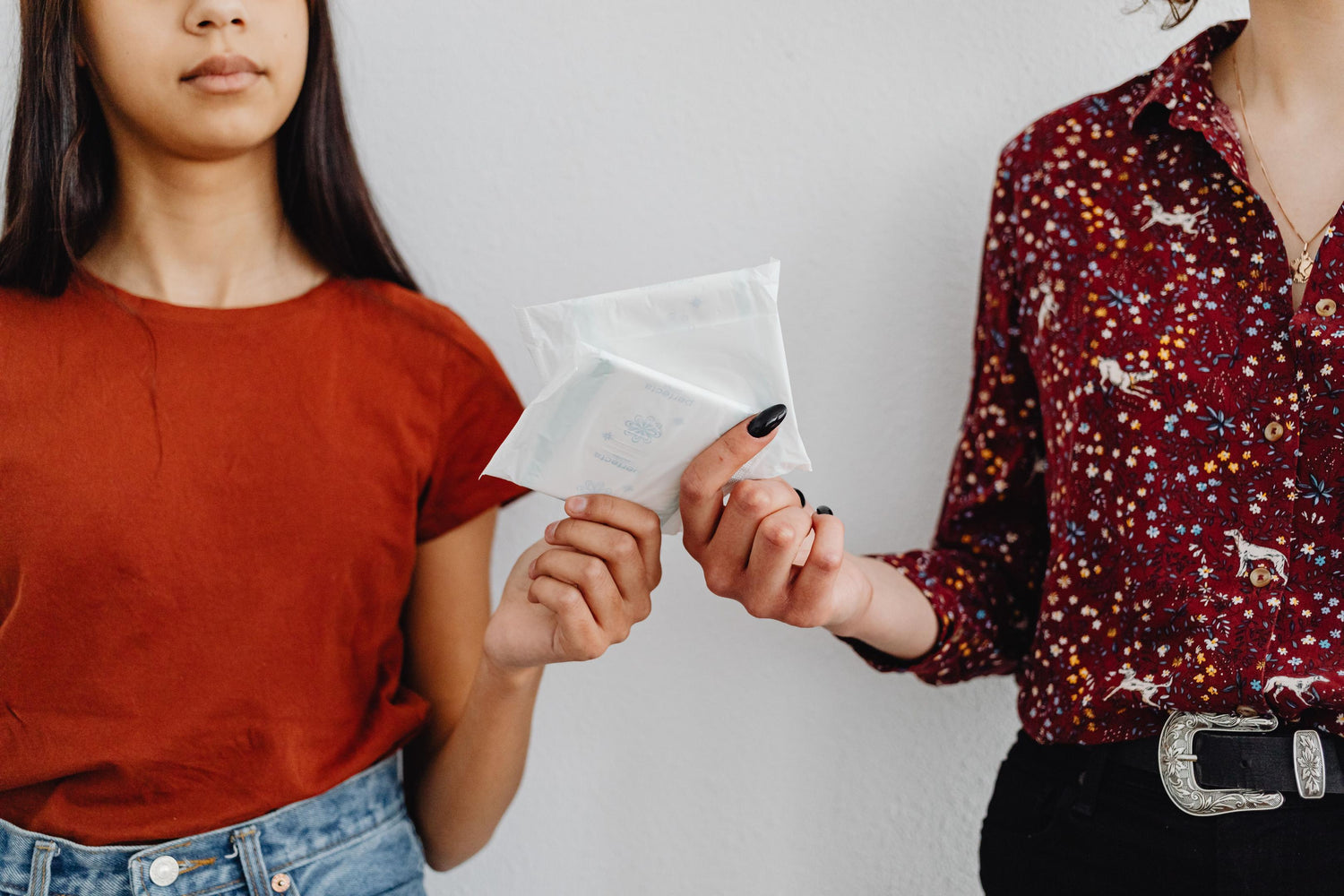
There's something I've noticed across different seasons of my life, with my sisters growing up, with my closest friends, and even with colleagues I spent long hours with at work. At some point, without any planning or coordination, we'd all end up bleeding at the same time.
I've heard the idea that if you spend enough time with the women around you, your hormones start to align and your bodies sync up.
But is it actually real?
Today I'm going down the rabbit hole on period syncing and diving into what it is, where the idea came from, what the science says when you pull back the curtain, and what's genuinely happening when the women in your life all seem to reach for a tampon at the same time.
What People Mean by "Period Syncing"
Period syncing, also called menstrual synchrony, is the belief that when women live together or spend significant time in close proximity, their cycles gradually shift until their periods start around the same time. The closer you are, the theory goes, the more your bodies get in sync.
This is completely different from cycle syncing, the wellness practice of aligning your diet, workouts, and work schedule with the different phases of your own cycle. Period syncing is about whether two people's bodies can actually coordinate their menstrual timing with each other and whether that's biology or a very convincing coincidence.
The assumed mechanism is human pheromones and chemical signals that travel through sweat and somehow communicate hormonal information from one person's body to another, nudging the timing of ovulation, adjusting the cycle, bringing everything into alignment.
Read: 27 Myths About Menstruation (Debunked)
Martha McClintock and the Study That Started Everything
To understand why period syncing became such an entrenched belief, you have to go back to 1971 and a young undergraduate named Martha McClintock at Wellesley College.
McClintock tracked the menstrual cycle start dates of roughly 135 women living in the same dormitory across an academic year. What she found was that women who spent more time together, specifically roommates and close friends, showed cycle start dates that appeared to converge over the months. By the end of the year, their periods were landing closer together than they had at the start.
She published her findings in Nature, and the paper immediately caught fire. It gave a name and a scientific stamp to something countless women already felt was true. The idea slid straight from academic journal into popular culture and has lived there, basically undisturbed, ever since and "The McClintock effect" entered the language.
The proposed mechanism was pheromones, which are airborne chemical signals that one woman's body emits and another's detects, triggers a cascade of hormonal adjustments that nudge ovulation timing and, ultimately, cycle start dates into alignment. It fit a romantic narrative about women's bodies being fundamentally attuned to each other.
But a single study from 1971, however influential, is a beginning, not a conclusion.
Where the Science of Menstrual Cycles Got Complicated
Menstrual cycles are not fixed. A "normal" menstrual cycle runs anywhere from 21 to 35 days, and the same person's cycle length can shift month to month based on stress, sleep, diet, illness, and about a dozen other variables. This variability is the key to understanding why the syncing story got so complicated, because it creates a statistical situation where overlap is essentially guaranteed, regardless of whether any coordination is actually happening.
Picture two women, let's call them Maya and Jess, with cycle lengths that differ by five days. Their periods will naturally drift toward each other, overlap, drift apart, and overlap again on a predictable schedule, without either of them doing anything, and without any pheromonal communication between them. Over the course of a year, there will be months where they're both bleeding at the same time and months where they're two weeks apart.
This is the core mathematical problem with period syncing research. When you put two independent cycles of similar-but-not-identical length on the same calendar and watch them for long enough, you will see convergence. You will also see divergence.
The starting-point problem compounds this. If you start measuring when two people's cycles happen to be far apart, which is what happens when two strangers move in together and begin paying attention, then of course the general trend will look like they're moving closer. They can only move closer or stay the same distance apart. Starting from maximum separation creates the illusion of convergence even when both cycles are doing exactly what they'd do if the other person didn't exist.
When researchers started designing studies specifically to account for these statistical quirks, the results became much less impressive. Several large, carefully controlled studies that followed McClintock's work failed to find reliable menstrual synchrony. Some found women's cycles drifting apart just as often as together. Léger and colleagues, in a 1996 study, found no evidence of synchrony at all. A 2006 Chinese study tracking women in a group living situation found that cycles moved in and out of phase with each other in patterns indistinguishable from chance.
Later researchers went back and looked at McClintock's original study itself, identifying methodological issues in how synchrony was defined and measured.
The Pheromone Question
If period syncing is real, pheromones are the assumed delivery mechanism. So, do human pheromones exist? And if they do, can they actually drive menstrual timing?
The honest answer is that we don't really know.
In some animal species, chemical signalling around reproduction is documented and well-understood. Female mice synchronise oestrous cycles in response to male pheromones in a phenomenon called the Whitten effect, which is distinct enough to have a name and a mechanism. In wolf packs and some primate groups, dominant females can chemically suppress the reproductive cycles of subordinate females, effectively controlling who in the group is reproductively active at any given time. This research is real, it's interesting, and it's probably why the leap to "this must work similarly in humans" felt so natural. If mice can do it, if wolves can do it, surely a species as socially sophisticated as ours is doing something at least as complex?
But the leap doesn't hold up cleanly. The VNO, the vomeronasal organ, is the structure most other mammals use to process pheromone signals. It's a small organ in the nasal cavity that detects airborne chemical compounds and routes that information directly to the parts of the brain involved in reproductive behaviour. Humans either lack this structure entirely or possess a vestigial, non-functional version of it. We don't have the sensory hardware that most pheromone-driven animals rely on. That doesn't definitively prove human chemical signalling is impossible but it removes the most obvious candidate mechanism and raises the question of how exactly this supposed transmission would even work.
Several researchers have attempted to demonstrate that underarm secretions from women in particular phases of their cycle collected on cotton pads worn close to the skin, then applied to the upper lip of test subjects could alter the cycle timing of women exposed to them. Some of these experiments did find small apparent effects on cycle length. Others found nothing. The results have been inconsistent and difficult to replicate, which in science is a significant problem.
The Lunar Cycle Myth
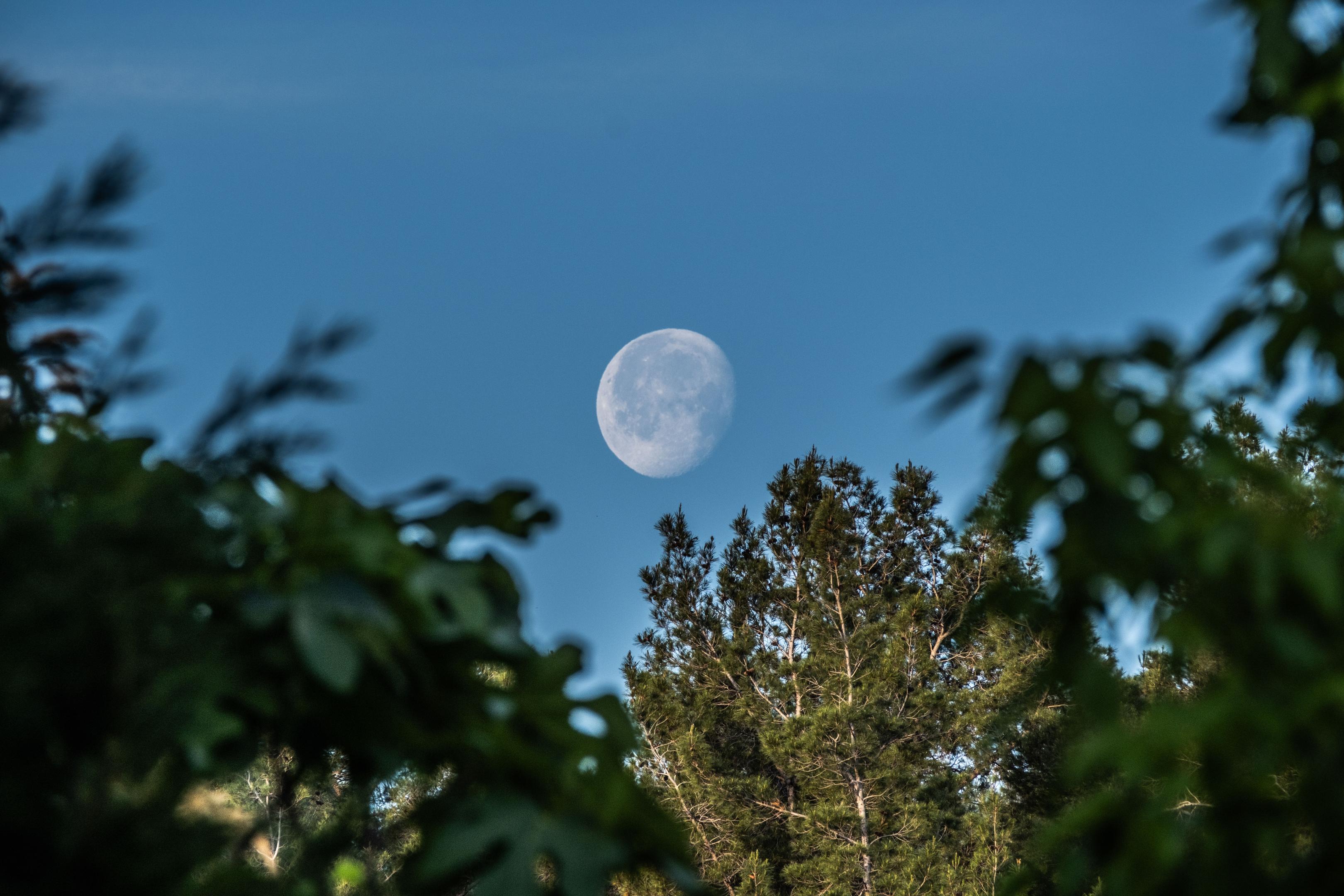
The lunar cycle is 29.5 days. The average menstrual cycle is roughly 28 days. These numbers are close enough that the connection feels obvious that women's periods are meant to align with the phases of the moon, and that something ancient and tidal is happening when you bleed at the new moon or the full moon, that there's a reason our ancestors tracked time by both.
Large-scale studies tracking thousands of cycles find no reliable link between menstrual timing and lunar phase. A 2021 study published in Science Advances tracked cycle data from 22 women over multiple years and did find that longer cycles occasionally synced with lunar rhythms, but these were outlier cycles, not a consistent pattern, and subsequent analysis suggested the effect could be noise. The mainstream consensus remains that there's no good evidence that the moon moves your period.
Read: 17 Surprising Facts About Periods Most People Don’t Know
So Why Does It Feel So Undeniably Real?
Confirmation Bias
Confirmation bias is doing a lot of heavy lifting. You remember the months your periods landed at the same time. You text about it, you tell the story, it becomes part of the lore of the friendship or the household. The months your cycles were two weeks apart and neither of you thought anything of it do not become stories. Memory tracks the hits and lets the misses fade. Over a year of living with someone, you might overlap three or four times. That's three or four memorable moments, and however many quiet non-events that simply disappear.
This is a well-documented feature of human cognition, and it's universal. We are pattern-detection machines operating in a world full of noise. Our brains learned to find signal in chaos long before we had statistics to check our intuitions against. The cost is that we see patterns that aren't there, and we see them with total conviction.
You're Talking About It
Close friends and roommates discuss their cycles. You know when someone's PMS is bad, when they're worried about being late, when their cramps are brutal. That awareness means overlaps get noticed and named in a way that would never happen between two strangers. The act of paying attention together creates the data, and data you're collecting together is data you're comparing together.
Two women living together today are probably both using period tracking apps. They can see their predicted start dates and compare them in real time. When those predicted dates fall within a week of each other, that feels significant. When they fall three weeks apart, it barely registers and you just both go on with your life. The asymmetry in how we notice overlap versus non-overlap is doing enormous work on our perception of how often syncing "happens."
Shared Environment Genuinely Does Affect Individual Cycles.
This is the part that's actually true, and it's more interesting than pheromones. People who live together share sleep schedules, stress loads, eating patterns, activity levels, and seasonal rhythms. A brutal deadline month affects everyone in the house. A change in routine, a run of bad sleep because the neighbours are loud, a stretch of late nights, all of these can genuinely nudge individual cycle timing. If two people are both responding to the same external stressors, their cycles may shift in similar directions at similar times, not because they're syncing with each other, but because they're both independently responding to the same conditions.
What Actually Moves Your Cycle
If pheromones and proximity aren't the answer, then what is? Quite a lot, as it turns out! And understanding this is genuinely useful.
-
Stress and cortisol: These are the most significant disruptors of cycle timing. When cortisol levels are elevated through sustained work pressure, a difficult relationship, grief, or a period of poor sleep, the body can delay or suppress ovulation. The follicular phase (the first half of your cycle, from period to ovulation) can stretch or compress. Everything shifts downstream from there. A delayed ovulation means a later period.
-
Hormonal birth control: Contraception overrides natural fluctuations entirely, which means two people on different methods, or one on hormonal contraception and one off will never actually sync in any biological sense. Their periods may overlap, but that's a function of when the respective pill packs or ring cycles happen to fall, not anything their bodies are doing in response to each other.
-
Diet and body composition: This affects oestrogen production and metabolism, which feeds back into cycle timing. Significant weight loss or gain, a period of restricted eating, or dramatic shifts in macronutrient intake can all move cycle length.
-
Sleep: Circadian disruption affects the hormonal signals that drive ovulation. Night shift work is associated with longer and more irregular cycles. Jet lag across multiple time zones can shift timing visibly.
-
Travel and illness: These are both physical stressors that can delay ovulation in the same way psychological stress does. A two-week holiday, a bout of flu, or a course of antibiotics, all of these can nudge your period's timing by days.
-
Exercise load: Heavy endurance training or very high-volume exercise can suppress ovulation entirely (athletic amenorrhea) or significantly extend cycle length. More moderate exercise has effects that vary by individual.
Read: Natural Remedies for Irregular Periods & Missed Cycles
The Bottom Line
The best scientific evidence we have does not support period syncing as a real biological phenomenon. The convergence people notice is most convincingly explained by cycle-length mathematics, confirmation bias, and the fact that people living together are exposed to the same environmental factors at the same time.
Martha McClintock's 1971 paper gave a name to an experience that felt true, and for fifty years that name stuck while the underlying science fell apart under scrutiny. The pheromone mechanism that was assumed to drive synchrony is unproven in humans. The replication of the original finding has been inconsistent at best. The statistical problems with measuring synchrony in the first place make it very easy to find patterns that aren't there, and very hard to confirm that any pattern you do find means something real.
But here's what's worth holding onto.
The fact that you're tracking your period at all, that's valuable. The fact that living with someone makes you aware of their cycle too, that you share the mild drama of a badly timed period, that you split the last tampon and have the "are we synced?" conversation, that connection is real, even if the biology behind it isn't.
Periods become less of a private inconvenience and more of a shared experience when you talk about them openly. That normalisation matters. The syncing narrative, even if it's scientifically shaky, has probably done some work in making periods a topic that gets discussed between women rather than quietly managed alone, and that shift is worth more than any pheromone study.