
10 Period Rituals That Makes Menstruation a Sacred Practice
Table of Contents
For centuries, women’s blood was revered as holy, the pulse of creation itself. Tribes would gather when the red flow arrived, knowing it marked a woman’s deep communion with life, death, and rebirth. Her blood was something to honor and was painted upon the earth, used in fertility rites, even offered to the gods as the essence of life force itself.
And yet, somewhere along the way, our modern world turned this sacred rhythm into something shameful. The crimson river became “dirty.” We learned to hide the pads, plug the flow, and move on as if our bleeding bodies were a flaw to be fixed rather than a portal of power.
But menstruation is the cyclical rhythm that mirrors the waxing and waning of the moon, a reflection of fertility and a woman’s relationship with the great mystery of life itself.
Through ritual, the modern woman can once again meet her blood with awe, and remember that what flows from her each month is a sacred blessing.
Why Do a Period Ritual?
1. Monthly Rite of Passage
The first menstruation, called menarche, was once a community event, a marking of entry into womanhood. In many traditions, a girl’s first bleed was met with celebration. She was bathed, anointed, and taught how to care for herself through the phases of her cycle. Older women would share knowledge and spiritual teachings about the creative power of the womb.
When menarche is honored, a girl is initiated into body literacy, which is the ability to read her body’s messages instead of fearing them. By contrast, modern culture often meets a girl’s first period with silence or embarrassment. That initial shame creates a disconnection that can last for decades. Reintroducing ritual helps repair that disconnect.
2. Period Positivity
Ritual also shifts the cultural story around menstruation. For centuries, women were told to hide their blood, sanitize their flow, and pretend nothing was happening. The result is a collective disconnection from our most regenerative phase. Period-positive practices reverse that conditioning by normalizing and celebrating the cycle.
3. Sacred Connection and Ease
Biochemically, menstruation is a low-hormone state, estrogen and progesterone drop sharply, slowing metabolism and shifting brain chemistry. The body asks for stillness and warmth. When we override these signals, we deplete our reserves. When we honor them, we restore balance.
4. Protection from Unwanted Negativity
Throughout history, menstrual blood was revered as sacred and also feared as powerful. In early medicine and folklore, it was seen as both healing and protective. While much of that lore has been distorted, the underlying truth remains that menstruation is a clearing phase. It’s when the body and energy field naturally detoxify.
When we honor this clearing, we become more discerning about what (and who) we allow in. This is why many women crave solitude or find social interactions draining during their bleed. Creating clear boundaries during this time is an act of self-protection. Some women create a “womb space” a corner with soft blankets, candles, or low music as a place to retreat when bleeding. You can aslo use a Free Bleed® Blanket as a cocoon, providing a sacred space to bleed into.
Indigenous Period Blood Rituals and Rites from History
Blood as Offering and Ecological Exchange
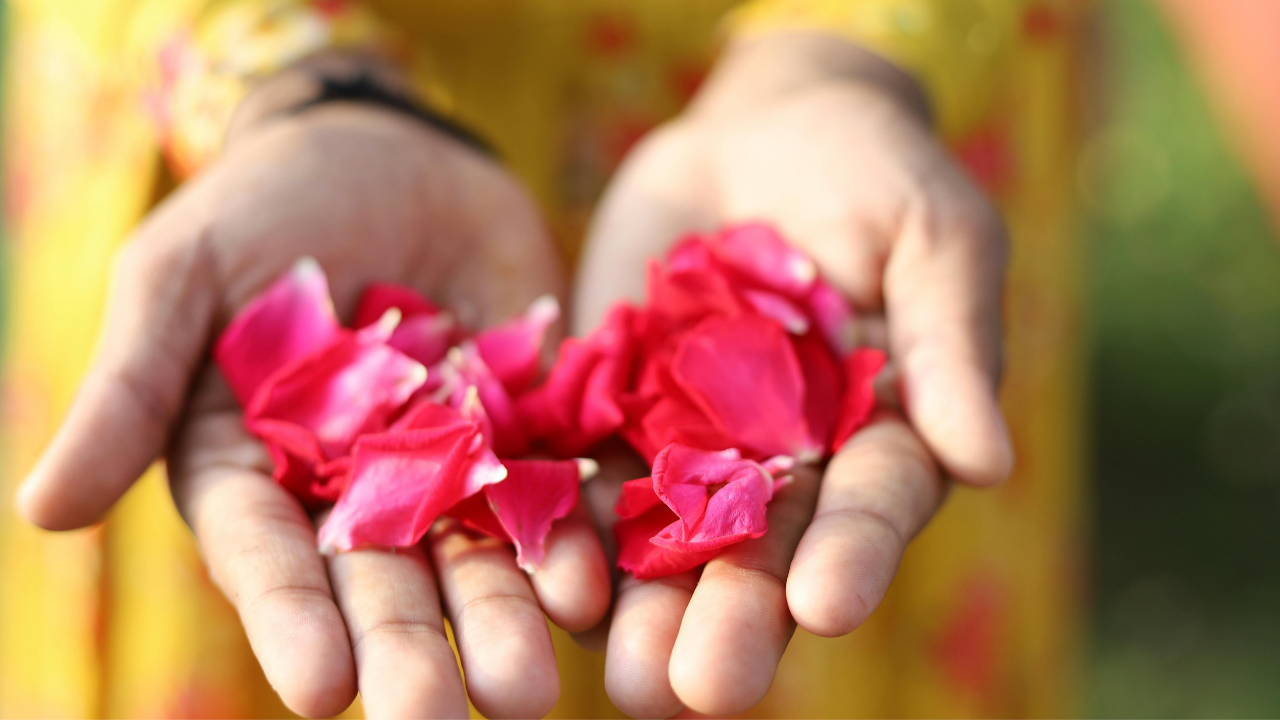
Archaeological and ethnographic records show that in some early hunter-gatherer societies blood–symbolism (often using red ochre) connected women’s reproduction, hunting, and land fertility.
Some contemporary ritual writers propose that in certain Pacific Northwest communities, menstrual blood may have been offered back to rivers or soil, symbolising fertility and connection with land.
There are suggestive traces in folklore and symbolic systems of pre-Christian Europe that menstruation and land fertility were ritually connected. Some mythic accounts speak of women honouring their cycle in relation to the soil and planting seasons, and ethnobotanical studies note that menstrual and lunar rhythms were seen as mirrors of the land’s fertility.
Moon Lodges and Menstrual Huts
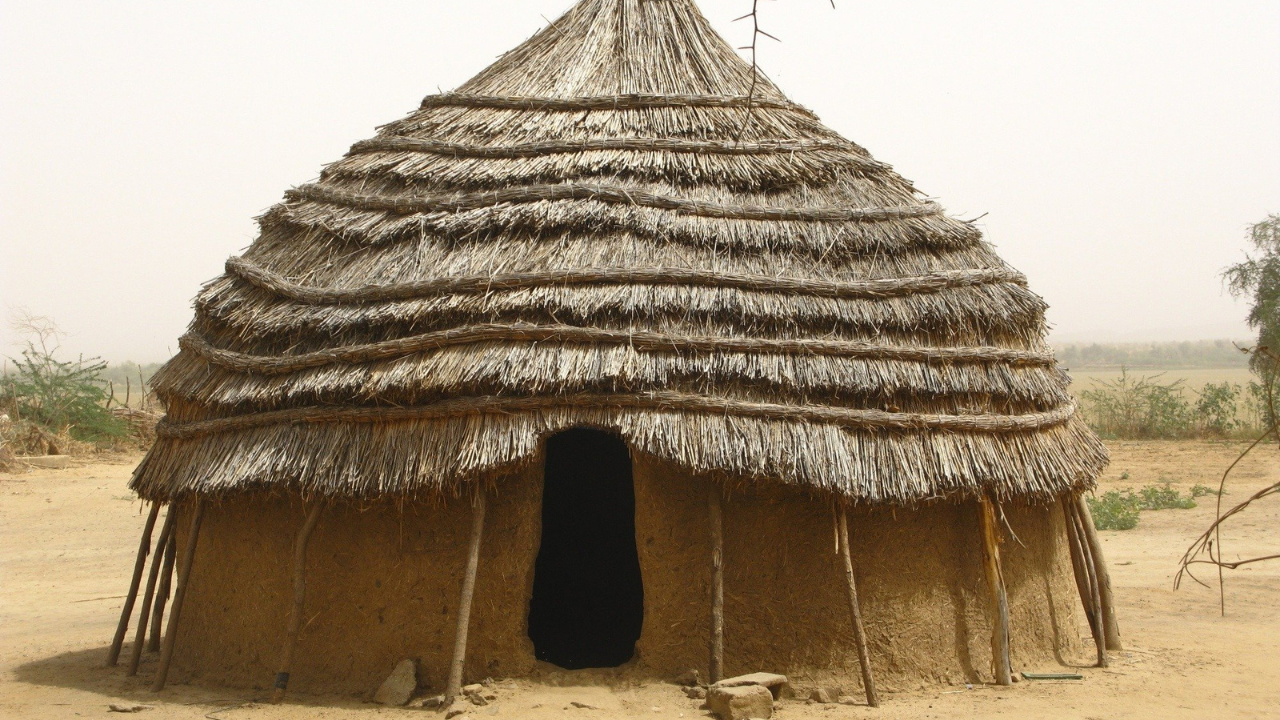
In numerous Indigenous North American traditions, menstruating women gathered in moon lodges which were round, insulated structures separate from everyday dwellings. Inside, the rhythm of life slowed to match the pace of the body. Fires burned low; herbs such as cedar, sage, or sweetgrass were smudged to clear the air. The women rested, shared stories, and recorded dreams that elders interpreted for guidance on crops, hunting, or community disputes.
These spaces also allowed women to rest from physical labor and maintain hygienic practices away from food storage areas, which were vulnerable to predators. Reverence and practicality intertwined.
Signs of Initiation
Among the Hupa people, the coming-of-age ceremony for young women following menarche, known as the ‘Flower Dance’ or Ch’iwal, is described as lasting up to ten days and involves teachings, songs, and community ritual support for the young woman’s transition
In parts of Papua New Guinea, red fibers or cloths were tied around a girl’s waist during initiation to symbolize her life-bearing capacity. Similar red adornments appear in ancient Near Eastern figurines of goddesses with painted streaks down the thighs.
Kamakhya: The Temple that Still Bleeds
In the hills of Assam, India, stands the Kamakhya Temple, one of the few living shrines where menstruation is celebrated as divine. The temple is built over a natural spring believed to be the yoni, or womb, of the goddess Kamakhya. Each year during the Ambubachi Mela, the spring water turns red with iron-rich silt from monsoon runoff, interpreted as the goddess’s menstrual flow.
For three days the temple remains closed while the goddess “rests.” Devotees do not worship; they honor her seclusion. When the doors reopen, thousands gather to receive angabastra, pieces of red cloth soaked in the sacred water, as tokens of fertility and renewal.
Sacred Menstrual Rituals
1. Wear Red

Wearing red during menstruation means consciously choosing clothing, jewelry, or fabric in the color of blood to honor the body’s creative fire. Red has always signified life force; it is the pigment of vitality and transformation. To wear it while bleeding is to align with that lineage of power.
2. Free Bleeding

Free bleeding is the intentional choice to allow menstrual flow without internal products such as tampons or cups, using absorbent cloths or blankets like the Free Bleed® blanket or period underwear instead. Physically, this lets the uterus contract naturally and can reduce cramps, and emotionally, it invites trust in the body’s own timing.
The practice is sacred because it embodies surrender and the willingness to let life move through without interference. Watching the rhythm of your own flow reconnects you with natural cycles that are expressions of the same movement of release.
3. Offering Blood to Water
This ritual involves symbolically returning menstrual blood,or an imagined offering of it to water, acknowledging the shared element that sustains all life. In many early cultures, women offered their blood to rivers and seas as gratitude for fertility and renewal. Water receives memory and carries emotion; to give back to it is to participate in that exchange. The act is sacred because it restores reciprocity where what leaves the body nourishes the world.
4. Give Blood Back to the Earth
Giving blood back to the earth is the practice of mixing a small amount of menstrual blood with water or visualizing that gesture and returning it to soil or plants. The minerals and iron in the blood literally nourish growth, but the deeper meaning is energetic of death feeding life, endings composting into beginnings.
5. Period Sex
Period sex is the choice to share intimacy during menstruation with awareness and mutual consent. Menstrual blood has long been surrounded by menstrual taboos. Choosing connection rather than avoidance during this time can be a quiet act of reclamation that desire and release can coexist. In that way, period sex becomes a ritual of integration. It honors the menstrual cycle’s dual nature of the letting-go that clears space for new life and the creative energy that still pulses beneath.
6. Attend a Red Tent Gathering
A red-tent gathering is a circle of women who come together during their menstrual phase or the dark moon to rest, share stories, and support one another. Historically rooted in moon lodges and communal retreats, the tent offers space where bleeding is normalized and honored. Its sacred function is women witnessing women, restoring community where silence once lived.
7. Rest and Go Inward
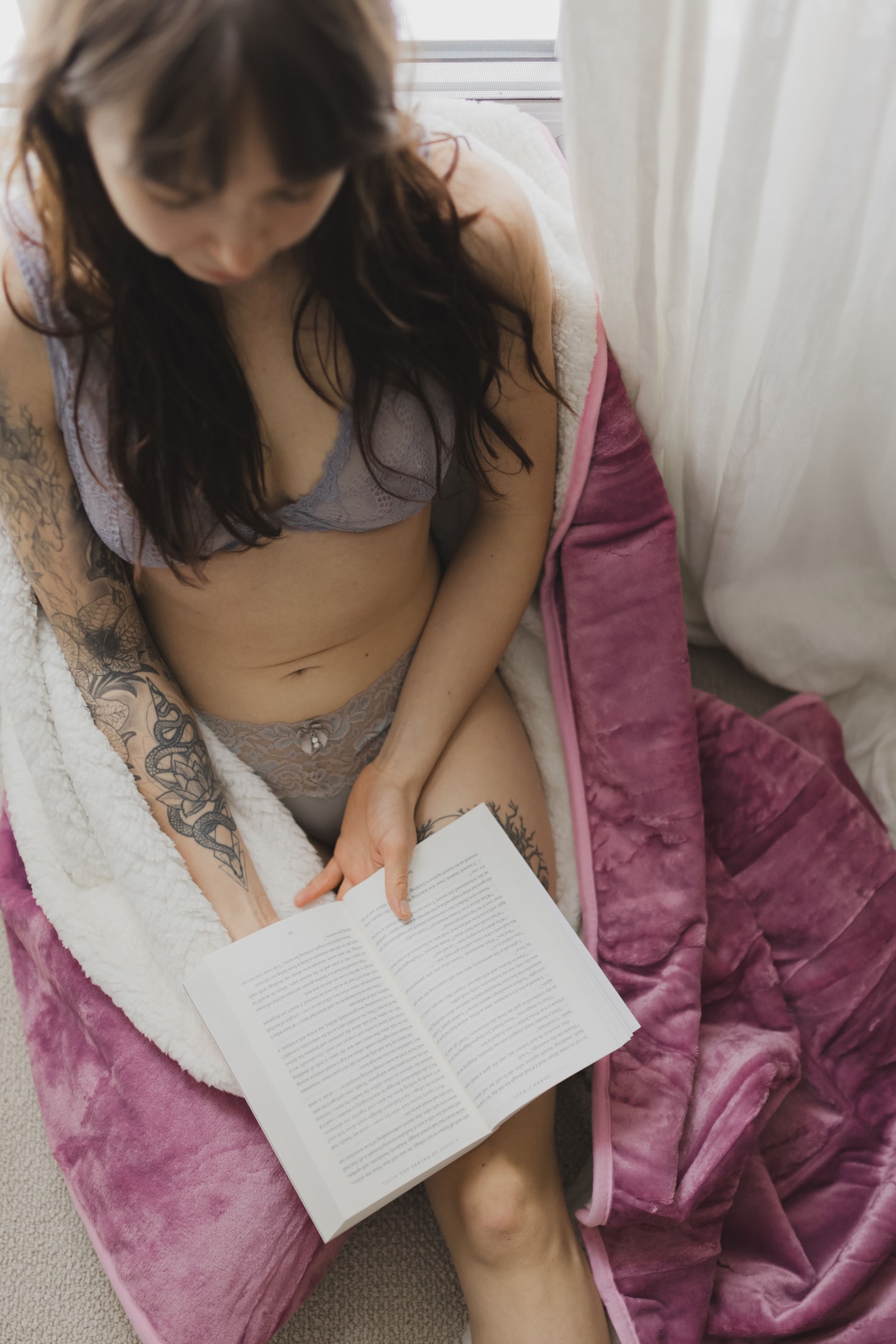
This ritual is the deliberate decision to slow or stop outward activity during menstruation. Rest is sacred because it opens a channel to inner knowing of the insights and emotional truths that surface only when we are still. A few days of intentional rest recalibrates the nervous system and affirms that worth is not measured by output but by alignment with your cycles and truth.
8. Create a Womb Cocoon
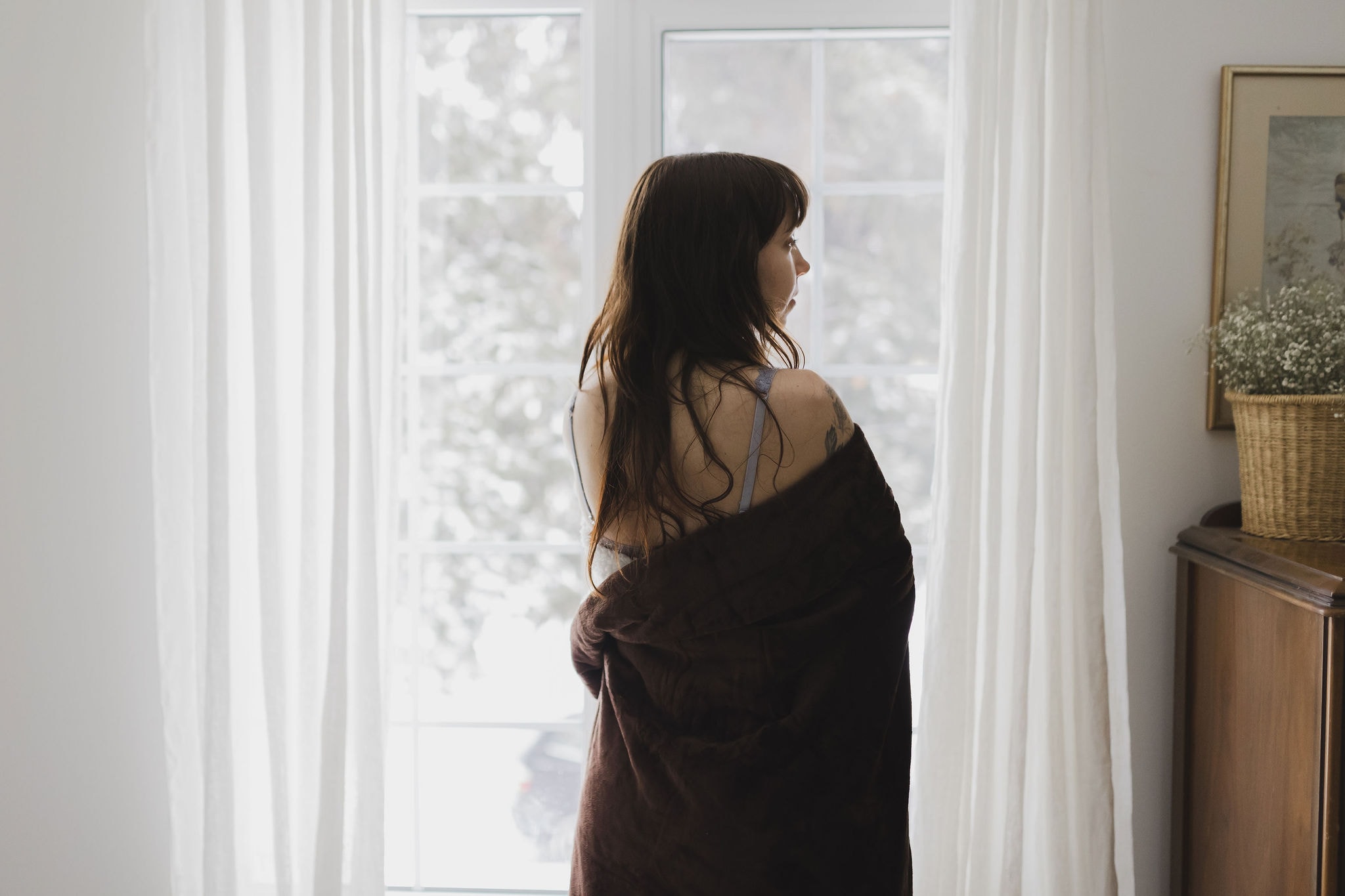
A womb cocoon is a period-ritual where you transform your resting space into a soft, enclosed sanctuary so the body can fully enter the menstruation phase of restoration. The Free Bleed® blanket serves as a perfect cocoon for this.
The sacredness of the cocoon lies in containment. Modern life asks women to stay outwardly focused even while their bodies are asking to turn inward. By recreating the atmosphere of the womb you invite your own psyche to experience what the body already knows, that rest is fertile. In this stillness, insights often surface that guide the next cycle.
9. Lay Under the Moonlight
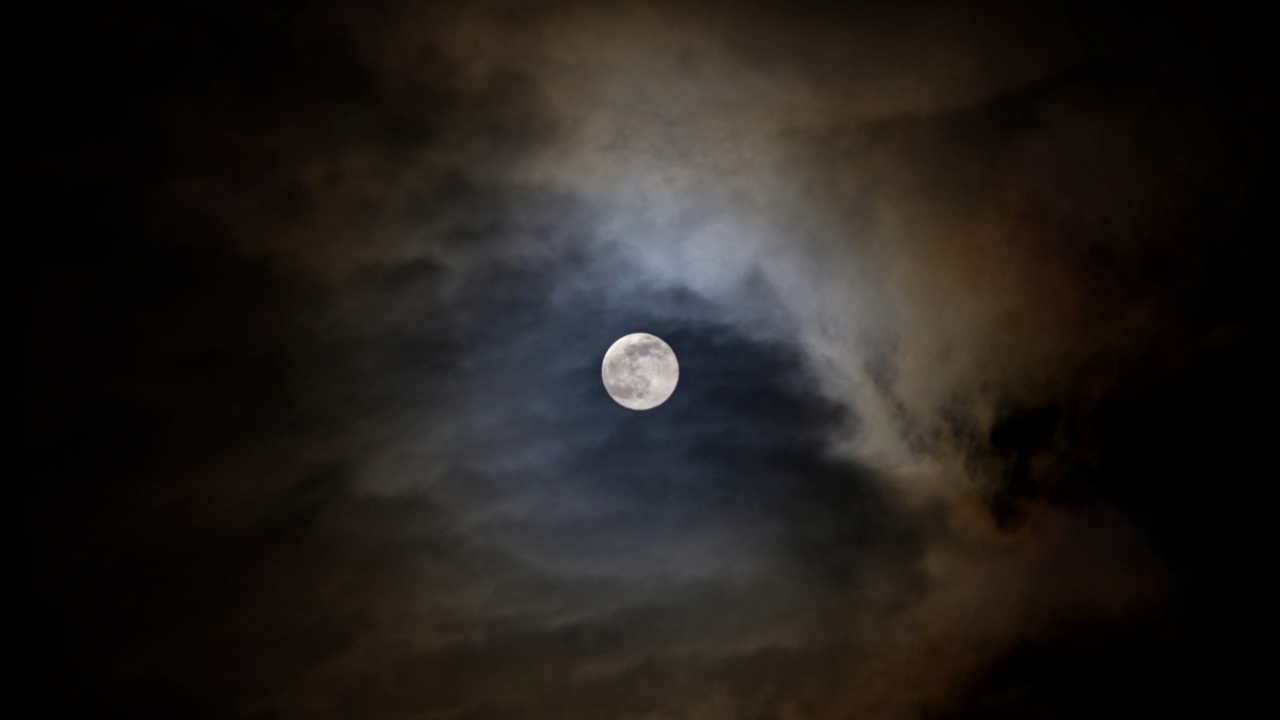
To lay under the moon is a conscious act of stepping outside artificial light and letting lunar light touch the skin. Before electricity disrupted natural circadian rhythms, many women menstruated during the dark moon and ovulated at the full. The menstrual cycle and the moon’s 29-day orbit are nearly identical in length, and exposure to natural moonlight helps regulate melatonin and other hormones that influence the menstrual phase.
You sit or lie beneath the night sky and let your body remember its ancient timing. The gentle brightness signals the pineal gland that day and night still exist in balance; the mind begins to quiet, the nervous system steadies. When a menstruating woman aligns her rhythm with the moon’s, she places herself back inside the larger design of Mother Earth.
10. Emotional Release
Emotional release is the ritual of allowing the inner to empty alongside the body’s physical shedding. During the menstruation phase, there is a thinning of the veil between the conscious and subconscious. This is why so many women menstruate with heightened sensitivity or emotion. The body is releasing what no longer serves so that renewal can occur in the next cycle.
An emotional release ritual can take many forms, depending on what the body asks for. Some women menstruate best in silence, letting tears fall in a warm bath or during alone time in their cocoon. Others need movement like shaking, gentle stretching, dancing, or walking until the breath deepens again. Sound is powerful too, and humming, sighing, or moaning tones that vibrate through the womb and chest help discharge tension.
Ritualizing Your Menstrual Cycle
Luxurious Self-Care Rituals
1. Follicular Phase: Planting Seeds
The days after bleeding are like dawn. Hormones rise, the mind clears, and the body leans naturally toward movement and new ideas. This is the phase of initiation, when fresh possibilities want to take root. Ritual here can be simple but intentional, like lighting a candle for clarity, journalling what you’re ready to begin, planning projects, or rearranging your space.
2. Ovulation: Connection and Expression
Ovulation is the full moon of the cycle. Estrogen peaks, words flow easily, and compassion and magnetism rise. It is the time for sharing ideas, meeting people, and celebrating vitality. Ritually, this phase invites you to express yourself. Host a meal, dance, create art, connect with other women. On a subtle level, ovulation teaches generosity and the willingness to be seen and to give energy freely. When honored, this time reinforces that fertility is about the ability to generate and exchange life force in all forms.
3. Luteal Phase: Refinement and Release
After ovulation, progesterone leads the body into introspection. The energy turns inward, focus sharpens, and irritations surface. This is the time for sorting and discernment.
A ritual for the luteal phase might include cleansing your home, pruning tasks, or writing forgiveness lists. It calls for honesty in what isn’t working, and what needs completion before the next cycle begins. The premenstrual mood swings so many women dread are the body’s way of demanding truth. When listened to, they become guidance
4. Menstruation: Rest and Guidance
The bleed is the descent, the dark moon, the renewal. Here, the body releases and the psyche dreams. This is the moment to stop pushing outward and to receive. Rituals of warmth, quiet, and reflection allow the womb to empty fully so that inspiration can refill it.
Menstruation’s sacredness lies in its wisdom that what ends must end and what’s empty must be allowed to stay empty before it can be filled again. To rest during this phase is to trust the intelligence and importance of our feminine cycles.
Frequently Asked Questions
A period ritual begins with awareness and taking at least a moment to recognize that the menstruation phase is a sacred process of renewal. Many women begin by creating space for rest during their bleeding time, turning the focus inward. This can be as simple as lighting a candle, journaling, or taking alone time with a warm coconut milk bath or raw honey tea to soothe cramps and clear the mind.
A menstruating woman might choose to use menstrual cloths, a menstrual cup, or even free bleed, honoring the natural flow without shame. In modern times, these menstrual rituals act as a bridge between science and spirit, reminding each woman that her menstrual blood, rich in stem cells, is not dirty but full of life force. Period rituals are about about self care and reverence, and honoring the body as an intelligent guide that helps women receive guidance for the next cycle.
Menstruation is sacred because it is the body’s built-in ceremony of death and rebirth and is the only time the body bleeds without injury. The menstrual cycle mirrors the phases of the moon and the seasons of Mother Earth, including the follicular phase for new ideas, ovulation for connection and fertility, the luteal phase for refinement, and the menstruation phase for release and wisdom.
Across cultural traditions, menstrual blood was once viewed as holy and as a substance that held creative and healing power. It symbolizes a woman’s fertility and her direct link to life itself. Menstruation rituals transform what the modern world has considered taboo into a form of holy communion with nature and spirit.
Among several Native American cultural practices, a young girl’s first menstruation, or her first period, was traditionally treated as an initiation. This rite of passage, sometimes called a moon time or first menstruation ceremony, marked her entry into womanhood. Older women and mothers gathered to teach her about the menstrual cycle and menstrual practices that supported reproductive health and community harmony.
In many tribes and rural areas, the girl would spend time in a special lodge or hut during her menstruation phase, resting and learning from other women about fertility, rhythm, and healing. She might be gifted red cloths or beads, symbolizing her connection to Mother Earth and the creative cycles of life.
While some religious beliefs or cultural traditions elsewhere labeled menstruation as impure, even closing temple doors or restricting male members from contact, Native ceremonies like these viewed the event as sacred.