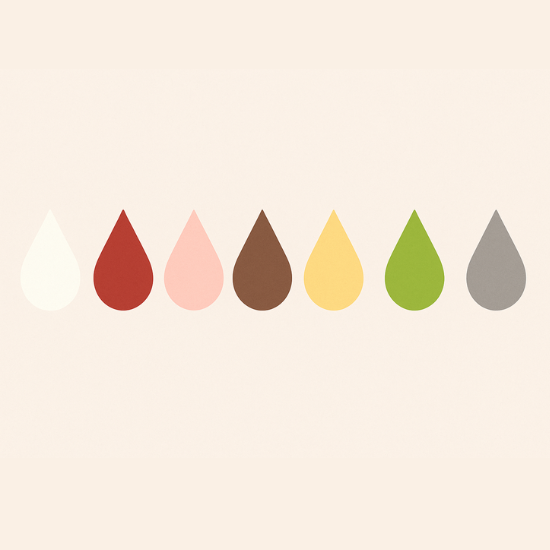
Vaginal Discharge Colors: A Practical Guide to Knowing What’s Normal
Table of Contents
Throughout a woman’s life, we can experience a variety of vaginal discharge colors. These changes are actually powerful indicators of what’s happening inside your body, and each color reflects a different state of your hormones and even emotional state.
Discharge is part of your body’s built-in self-cleaning system and keeping your internal ecosystem balanced. Its color and texture change naturally through the month.
In this article, we’ll explore what’s considered healthy vaginal discharge and what colors can signal imbalance or infection so you can understand what’s truly normal for your body and recognize when something deserves a closer look.
What is vaginal discharge?
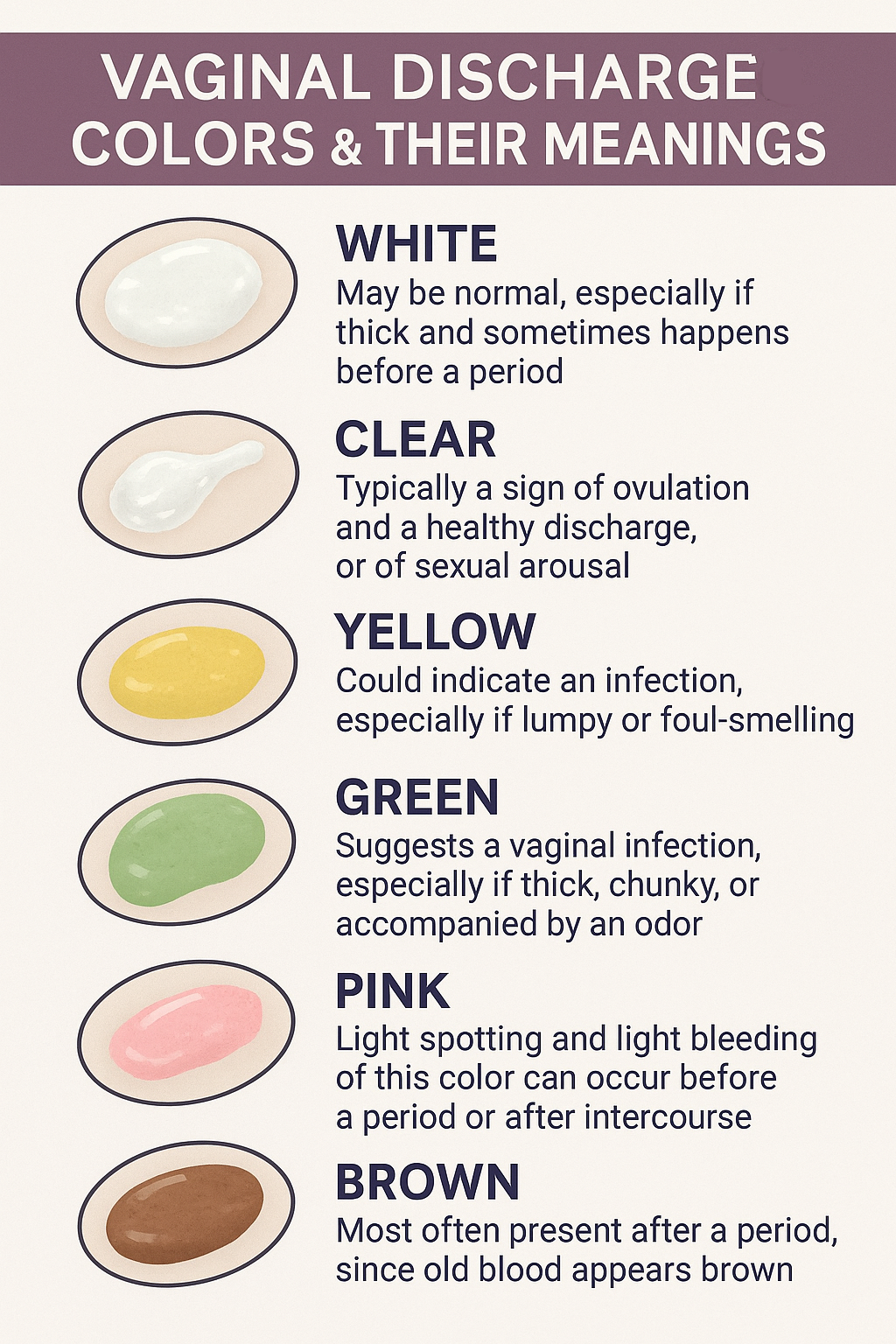
Vaginal discharge is one of the most sophisticated biological systems in the female body. It is a constantly adapting mixture of cervical mucus, vaginal secretions, beneficial bacteria, and shed epithelial cells that together maintain the internal health of your reproductive tract.
At any given moment, your discharge reflects the state of your vaginal microbiome, a finely tuned ecosystem made up of trillions of bacteria, primarily Lactobacillus species. These bacteria produce lactic acid, which keeps the vagina’s pH slightly acidic (around 3.8 to 4.5). That acidity prevents harmful microbes like Gardnerella vaginalis, Candida albicans, and E. coli from colonizing the vaginal walls. When the microbiome is balanced, discharge smells faintly earthy or tangy, a sign of protective acidity at work.
Vaginal Discharge and Your Cycle
Your vaginal discharge moves in rhythm with your hormones. Every day of your cycle, estrogen and progesterone shift the texture, amount, and color of your cervical fluid. Once you start paying attention, you’ll notice a pattern as reliable as the moon with signs your body uses to mark each hormonal phase.
Days 1–5: Menstruation — Red or Bloody Discharge
During your period, discharge merges with menstrual blood as the uterus releases its lining. What you see is mostly blood, but cervical fluid and tissue are present too, giving texture to what leaves your body. Flow may begin bright red, darken to brown toward the end, and thin as estrogen begins to rise.
Days 6–12: Post-Period — Cloudy, Sticky, or White
Once bleeding ends, estrogen slowly builds. Discharge at this stage is often minimal, thick, tacky, or creamy. It can cling to your fingers and appear opaque or off-white. This marks the “dry phase” of your cycle when fertility is low, and your body is rebuilding uterine tissue.
Days 13–15: Ovulation — Clear, Slippery, and Stretchy
As estrogen peaks, discharge transforms. It becomes transparent, wet, and elastic, like raw egg white, and may stretch several centimeters between your fingers. This is fertile mucus, designed to help sperm survive up to five days and glide easily toward the cervix. Many women notice an increase in libido and natural lubrication here; your body is literally inviting life.
Days 16–28: Post-Ovulation — Thick, Creamy, or Tacky
After ovulation, progesterone rises. The cervical fluid thickens again, turning cloudy, sticky, or lotion-like. You might notice less of it overall as your cervix begins to close. Toward the end of this phase, discharge can become slightly yellow or dry before menstruation returns.
What is considered normal vaginal discharge?
Texture
Vaginal discharge can shift between watery, sticky, egg-white-like, or milky depending on where you are in your cycle.
-
Watery discharge appears after your period or after exercise, it’s light, thin, and shows your estrogen is beginning to rise.
-
Sticky or tacky discharge happens before ovulation when cervical mucus starts to build.
-
Egg-white-like discharge is stretchy, slippery, and often clear, this is your fertile window, when estrogen peaks.
-
Milky or creamy discharge follows ovulation as progesterone thickens the mucus to protect your cervix.
Each texture serves a purpose, guiding sperm, cleansing the canal, or sealing the cervix.
Color
Healthy discharge generally ranges from clear to white, sometimes appearing pale yellow once dried.
-
Clear means hydration and hormonal balance.
-
White or off-white indicates natural mucus accumulation around the start or end of your cycle.
-
Slightly yellow on underwear is simply oxidation — not infection.
-
Brown or pink discharge can appear just before or after your period as old blood clears.
Colors like green, gray, or bright yellow, however, signal an imbalance or infection that needs attention.
Smell
Every vagina has a natural scent, mild, musky, or slightly tangy, due to lactic acid from healthy Lactobacillus bacteria.
-
A normal scent might change slightly after sex, menstruation, or sweating but should return to neutral quickly.
-
A fishy, metallic, or foul odor can indicate bacterial vaginosis or another infection, especially if discharge is thin or grayish.
-
A yeasty, bread-like smell usually pairs with clumpy white discharge and itching — a sign of Candida overgrowth.
Amount
The vagina can produce anywhere between 1 and 4 milliliters (¼–1 teaspoon) of discharge per day, though it often increases during ovulation, arousal, or pregnancy.
-
More discharge during your fertile window or when sexually active is normal — your body is naturally more lubricated and open.
-
Less discharge during breastfeeding, perimenopause, or high stress is common due to lower estrogen.
-
Sudden changes in amount, especially paired with odor or irritation, are worth paying attention to.
Why does vaginal discharge smell sometimes?
Most vaginal discharge has a scent, and in most cases, that’s entirely normal. The vagina is a self-regulating ecosystem filled with beneficial bacteria. These bacteria produce lactic acid that keeps the pH slightly acidic, between 3.8 and 4.5. This acidity protects against infection and gives discharge its natural aroma, often described as musky, earthy, or gently tangy. It’s the scent of a living body doing its job.
Sometimes, though, the balance of bacteria inside the vagina shifts. When that happens, the smell can change too. The most common reason for a strong or fishy odor is bacterial vaginosis (BV), an overgrowth of certain bacteria like Gardnerella vaginalis that disrupts the acidic environment. BV discharge is usually thin, gray, and may smell fishy, especially after sex or menstruation, when pH temporarily rises. This imbalance is common, not dangerous, but needs treatment to prevent recurrence.
Another cause of noticeable odor is trichomoniasis, a sexually transmitted infection caused by a parasite. It produces a distinctly strong, sometimes rotten or sour smell, often accompanied by green or yellow frothy discharge and itching or burning. Trichomoniasis won’t resolve on its own and requires treatment for both partners.
By contrast, yeast infections rarely cause a strong odor. The discharge is thick, white, and clumpy, similar to cottage cheese, and the scent is mild or slightly bread-like. Yeast infections usually result from an overgrowth of Candida albicans, often triggered by antibiotics, tight clothing, excess sugar, or hormonal changes. The most noticeable symptoms are itching and irritation, not smell.
Types of Discharge (by Color)
Clear discharge
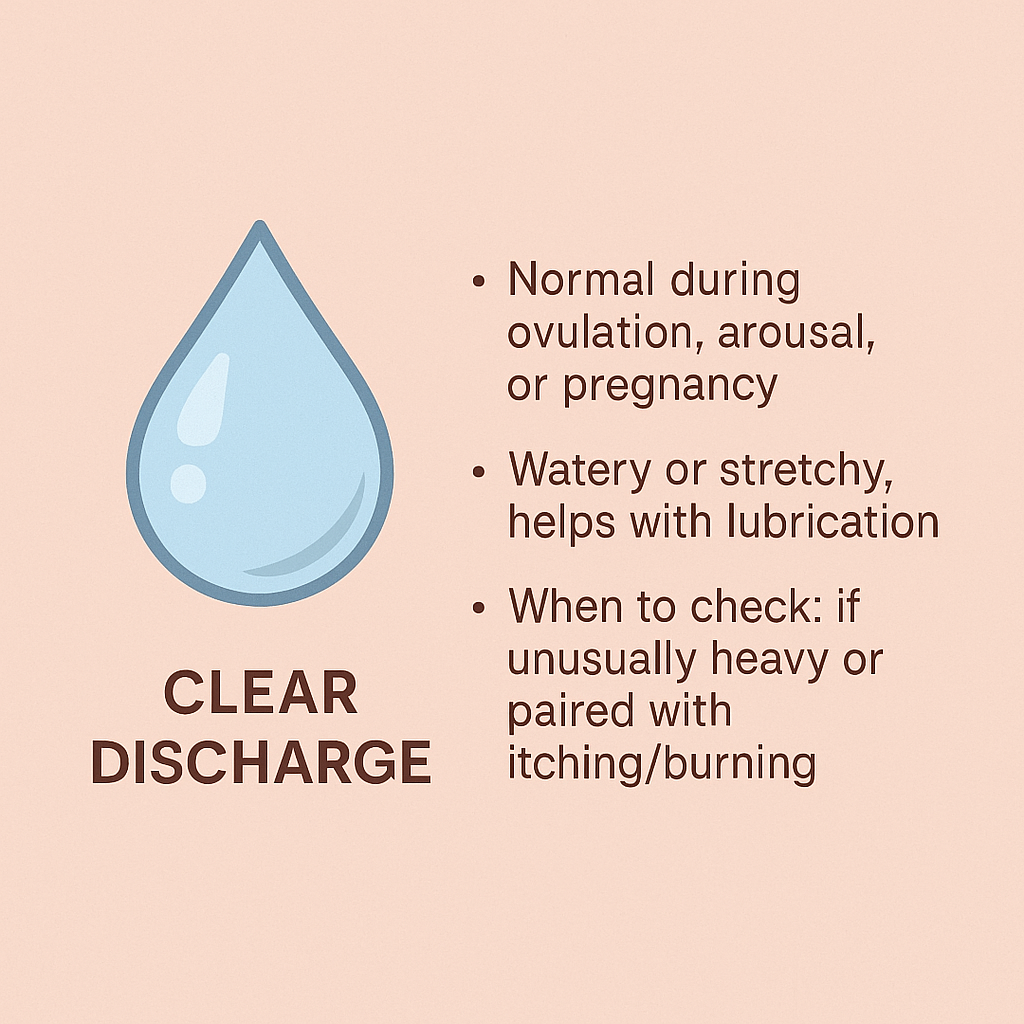
Clear discharge is one of the healthiest and most common types you’ll notice. It’s typically thin, watery, or slightly stretchy, sometimes resembling raw egg white. This kind of discharge appears most often around ovulation, during arousal, or in early pregnancy.
During ovulation, rising estrogen stimulates your cervix to produce this slippery, transparent fluid. It acts like a natural lubricant, helping sperm survive and move toward the egg. Around sexual arousal, you’ll see the same effect where the increased blood flow to your pelvic area signals the glands around the vaginal opening to release fluid that keeps the tissue wet and ready for penetration.
In early pregnancy, clear discharge may also become more abundant. Hormones like progesterone and estrogen surge to build the uterine lining and protect against infection, which often increases natural secretions.
If it suddenly becomes unusually heavy, accompanied by itching, burning, or a sour odor, or if it changes texture to become foamy or grayish, it’s worth getting checked. These shifts may suggest an infection or irritation rather than a hormonal fluctuation.
White discharge
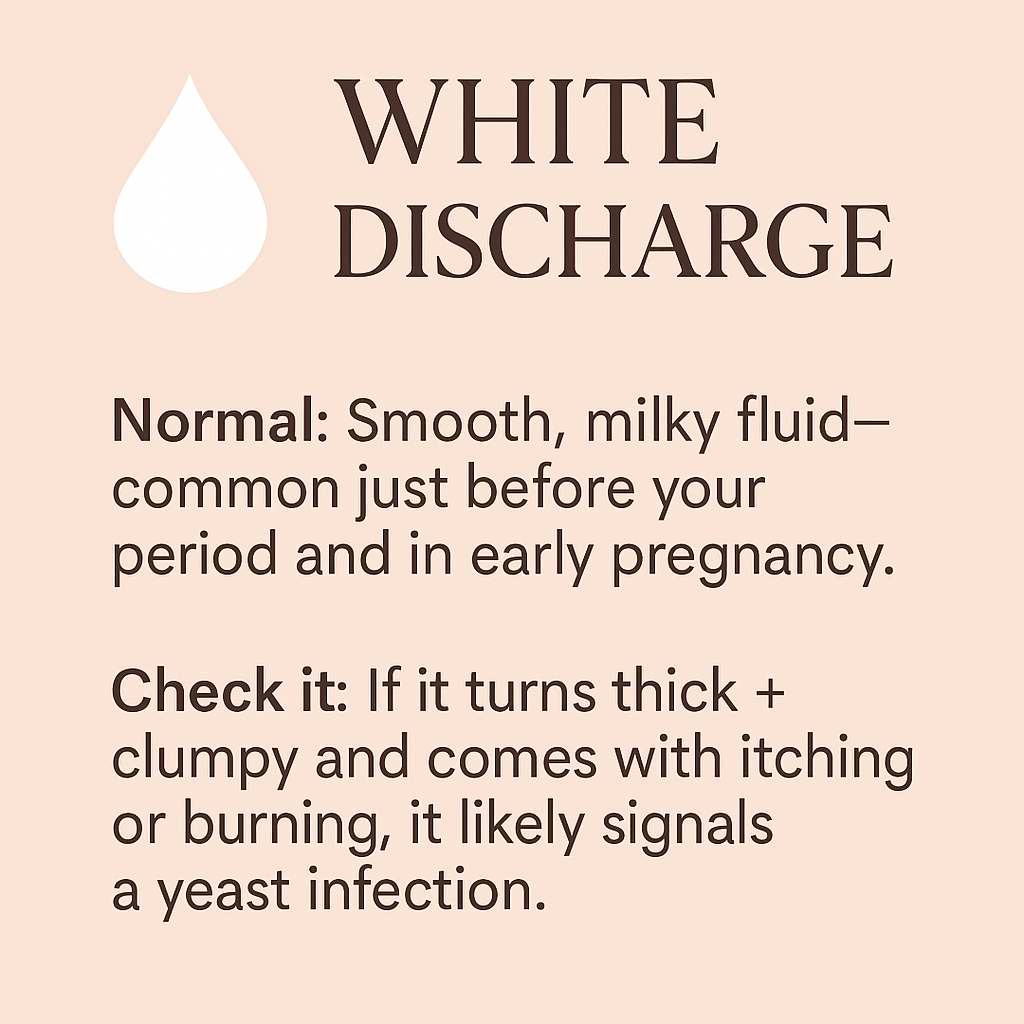
A milky white or creamy discharge is often completely normal, especially in the days before your period or in early pregnancy. During this time, progesterone levels are high, which thickens cervical mucus to form a protective barrier in the cervix. The result is a soft, opaque discharge that can feel lotion-like or slightly thick on your fingers.
Many women also notice white discharge in the early stages of pregnancy. This increase in fluid, called leukorrhea, helps protect the uterus by keeping bacteria out and maintaining a balanced pH. It’s generally odorless or has only a faint, musky scent which is a sign that your vaginal microbiome is healthy and active.
When the texture becomes thick, clumpy, or “cottage cheese-like,” it’s usually a sign of a yeast infection caused by an overgrowth of Candida albicans. This type of discharge may be accompanied by itching, burning, irritation, or redness around the vulva. Yeast infections often occur after antibiotics, during hormonal changes, or in warm, damp environments where yeast can thrive
Red or brown discharge
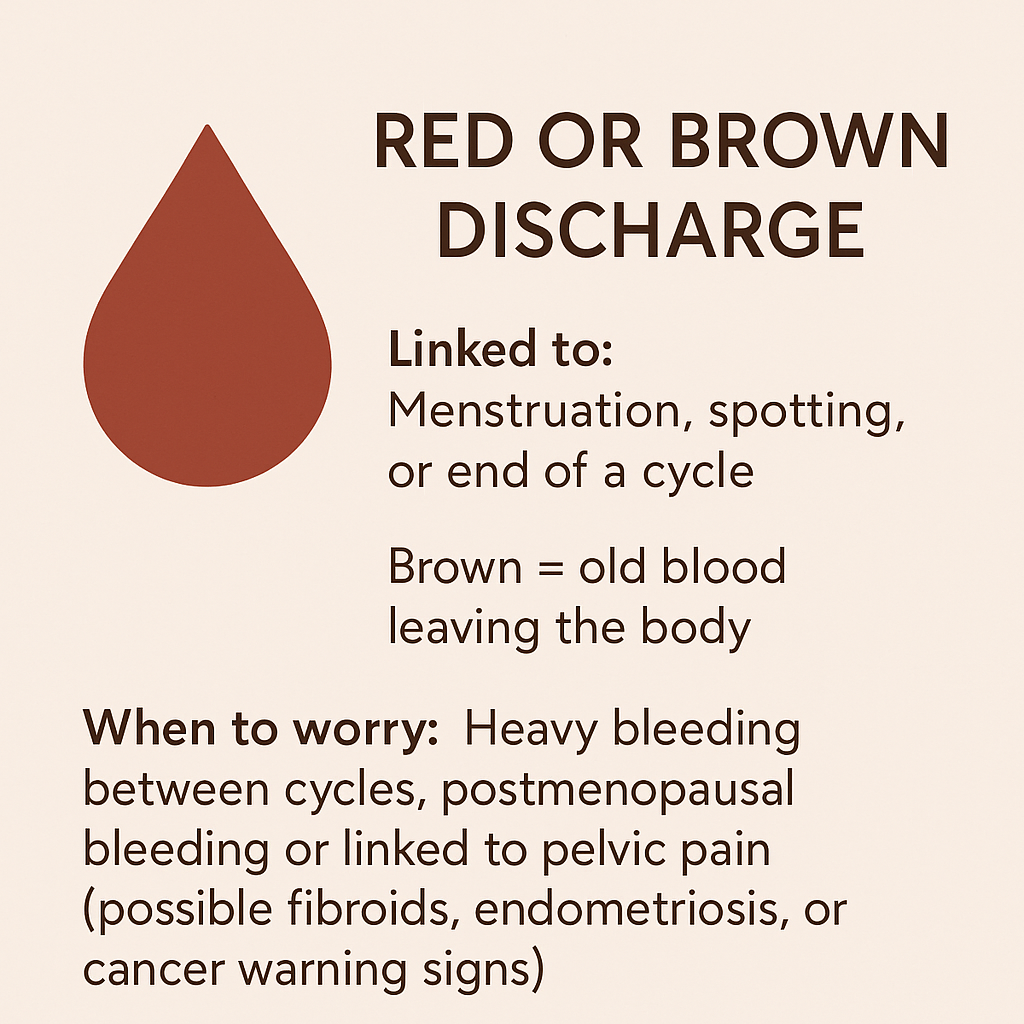
Red and brown discharge are both connected to the natural process of menstruation and the body’s way of releasing blood from the uterus. Red discharge usually appears at the start of your period or during spotting between cycles, while brown discharge tends to show up at the end. It’s simply old blood that has oxidized as it left the body.
Brown discharge can also appear a day or two before your period as your cervix begins to open, or after sex if the cervix is sensitive. In early pregnancy, some women notice light brown spotting known as implantation bleeding, which occurs when the fertilized egg attaches to the uterine wall.
While red or brown discharge is typically normal, there are times when it signals something deeper. If you experience heavy bleeding between periods, bleeding after menopause, or persistent pelvic pain with the discharge, it’s important to be checked for underlying conditions such as fibroids, endometriosis, or, in rare cases, cervical or uterine cancer.
Light brown streaks that taper off with your cycle are the body’s natural cleanup; but bleeding that’s unrelated to your period, lasts more than a few days, or comes with pain or fatigue deserves medical attention.
Pink discharge
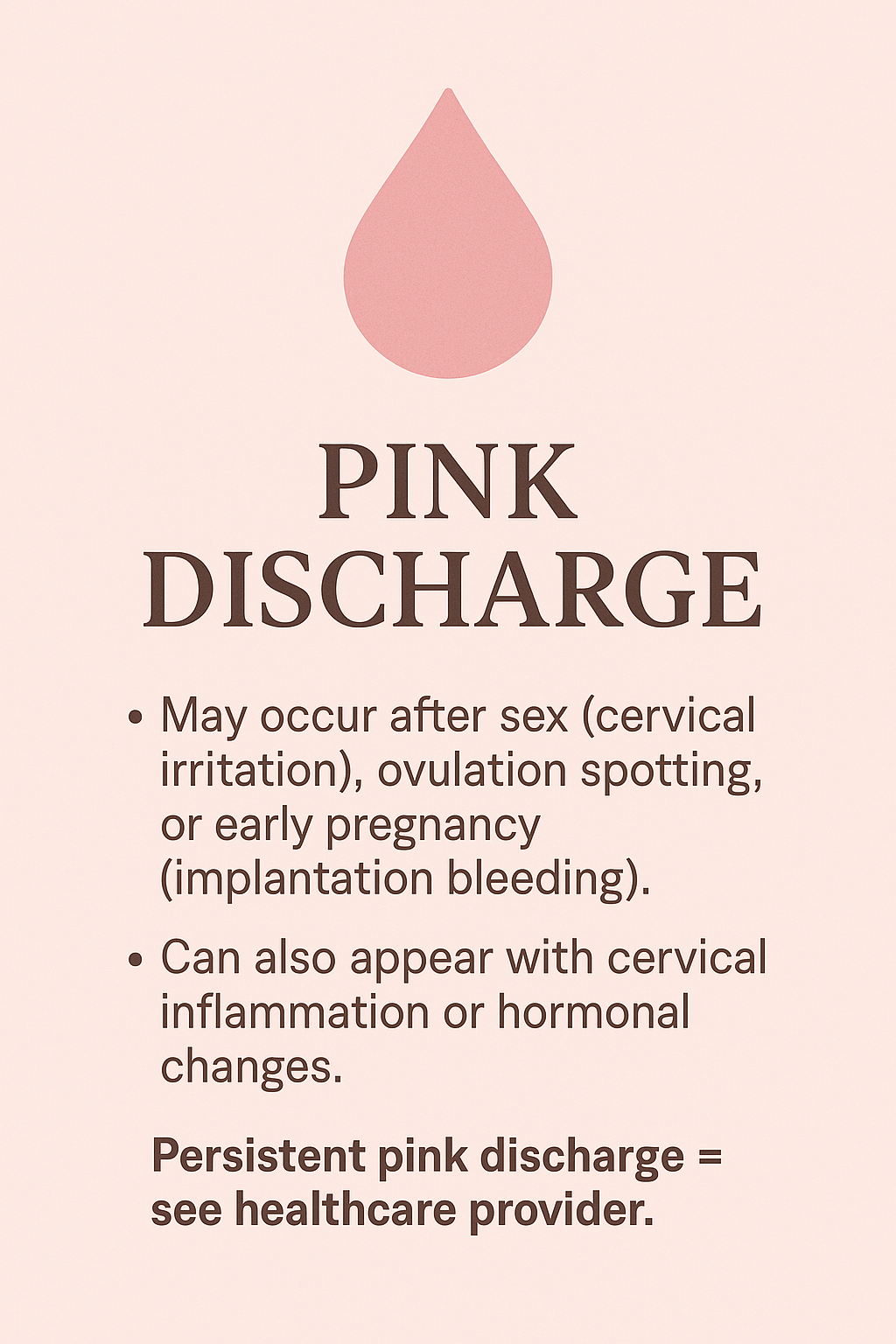
Pink discharge usually appears when a small amount of blood mixes with normal vaginal mucus, giving it a pale blush or rose tint. It often shows up during transitional moments in your cycle and times when hormone levels shift or when the cervix becomes more sensitive.
It’s common to see pink discharge after sex, especially if the cervix is slightly irritated. The tissue of the cervix is rich with tiny blood vessels that can break easily from friction, deeper penetration, or even a Pap smear. This kind of spotting is brief and fades quickly.
Some women also experience pink discharge around ovulation, when estrogen peaks and the follicle releases an egg. The sudden drop in estrogen that follows can cause a small amount of bleeding, which mixes with cervical fluid to create that soft pink hue.
In early pregnancy, pink discharge can appear as implantation bleeding, a very light spotting that happens when a fertilized egg attaches to the uterine wall. It’s often one of the first signs of conception and tends to occur about 6–12 days after ovulation.
However, pink discharge can also occur with cervical inflammation, hormonal fluctuations from birth control, or conditions that cause irregular shedding of the uterine lining. When pink discharge becomes persistent, especially if accompanied by pelvic pain, odor, or bleeding after sex, it’s important to see a healthcare provider.
Yellow discharge
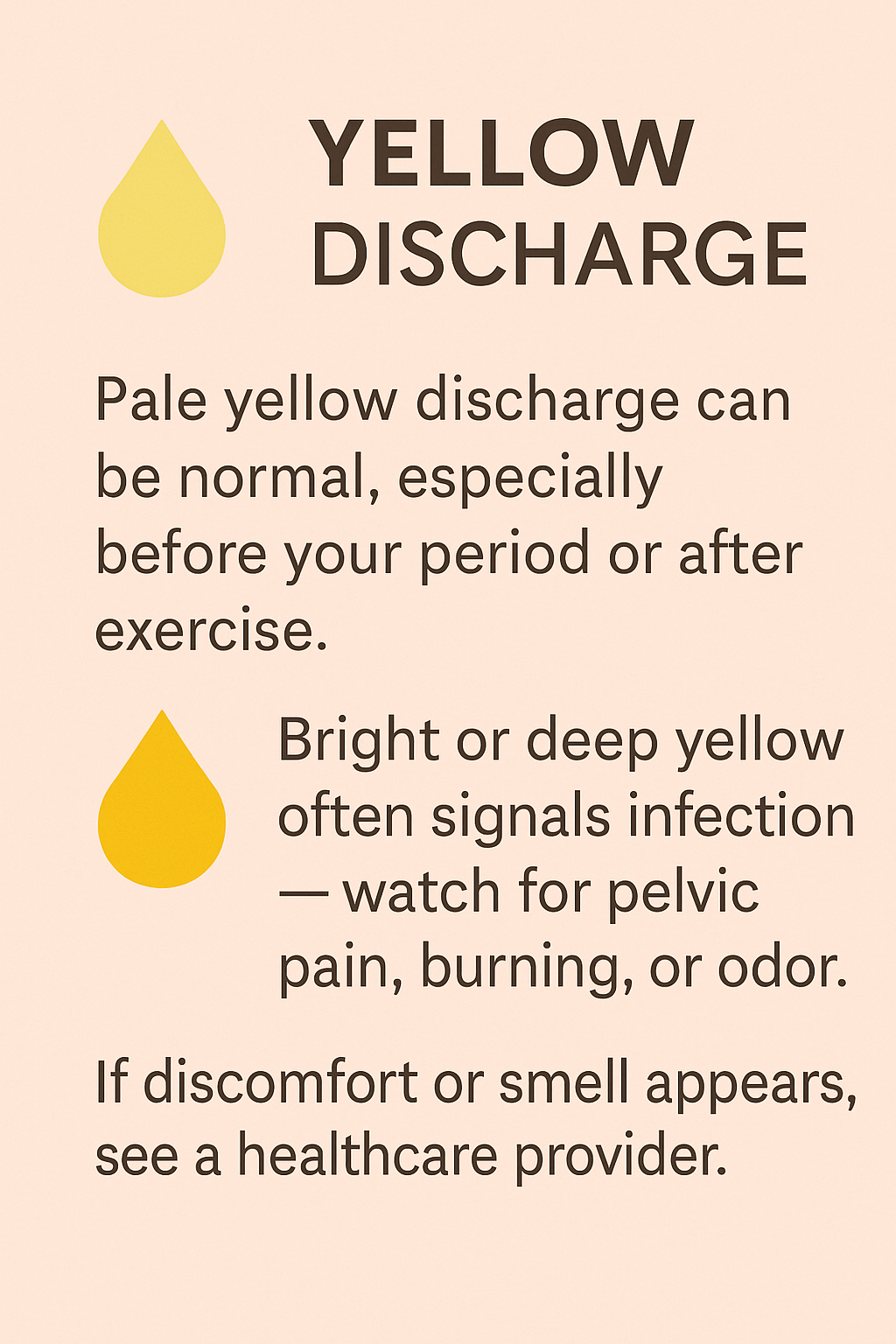
A pale yellow tint is often harmless, it can come from slight oxidation after exposure to air, dietary factors (like vitamin supplements), or hormonal changes before your period. When the discharge is light in color, smooth in texture, and free of odor or irritation, it usually isn’t a cause for concern.
However, bright or deep yellow discharge can signal an infection, particularly if it’s thick, clumpy, or paired with a noticeable odor. This is especially true when it’s accompanied by burning during urination, or a sour or foul smell. The most common culprits are sexually transmitted infections such as chlamydia, gonorrhea, or trichomoniasis. Each of these can inflame the vaginal and cervical tissues, leading to changes in color and texture as the body reacts to infection.
Green discharge

Green discharge is rarely normal and almost always indicates an underlying infection that needs medical attention. The green hue often comes from the presence of pus or an overgrowth of certain bacteria or parasites in the vaginal canal.
It’s most commonly associated with sexually transmitted infections (STIs) such as trichomoniasis, chlamydia, or gonorrhea. The discharge may appear frothy, thick, or clumpy, and is often accompanied by a strong, unpleasant odor. Many women also experience pelvic pain, itching, or burning during urination.
Because these infections can spread internally to the uterus or fallopian tubes if untreated, green discharge always warrants immediate medical testing and treatment.
Gray discharge
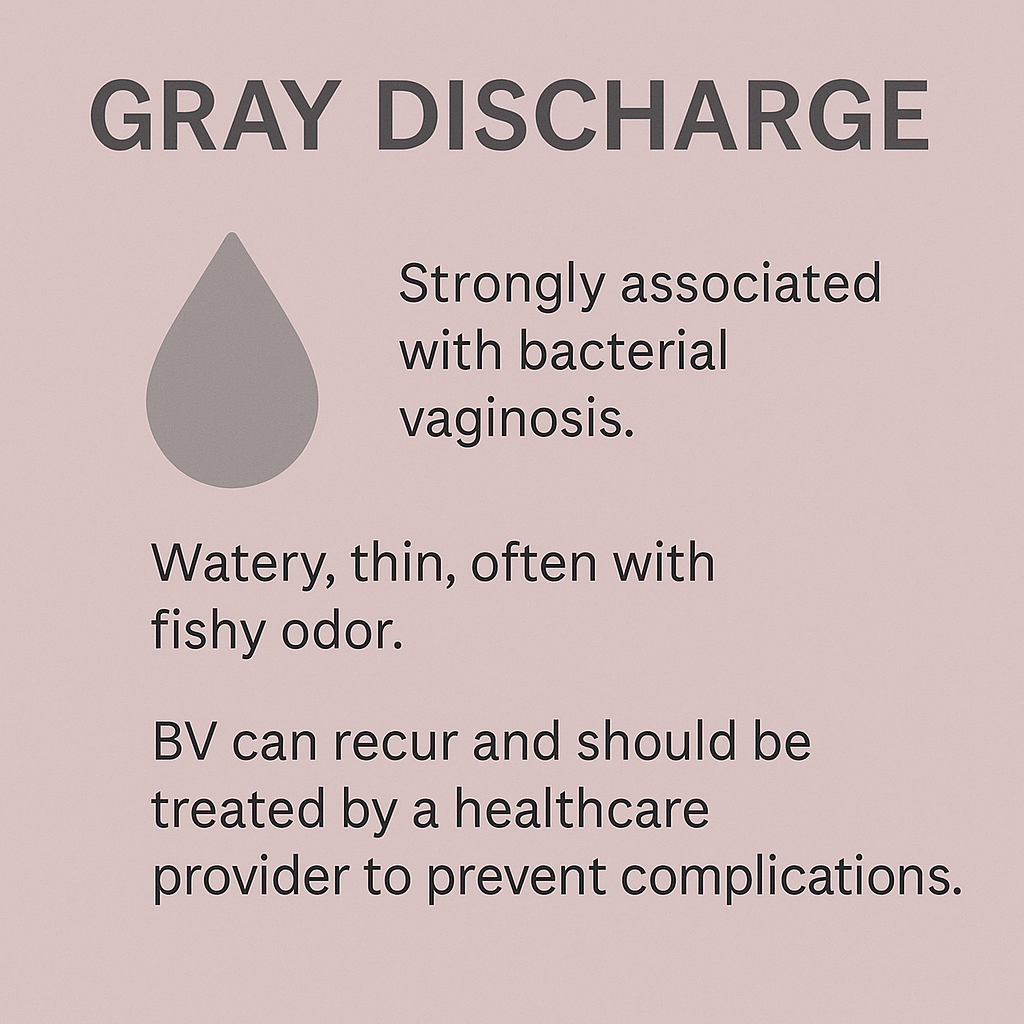
Gray discharge is strongly associated with bacterial vaginosis (BV). This type of discharge is usually watery or thin, sometimes slightly frothy, and almost always accompanied by a distinct fishy or metallic odor. The smell often becomes more noticeable after sex, as semen temporarily raises vaginal pH and amplifies the scent.
BV itself isn’t a sexually transmitted infection, but sexual activity can contribute to the imbalance, especially when condoms aren’t used or when new partners are introduced. Hormonal changes, antibiotics, and scented soaps or washes can also disrupt the natural flora and lead to BV.
Although it’s common and treatable, BV tends to recur if left unmanaged. Persistent cases can increase the risk of pelvic infections, fertility challenges, or pregnancy complications.
If you notice gray discharge with a fishy smell, it’s important to see a healthcare provider for testing and treatment.
Frequently Asked Questions
Vaginal discharge colors that signal a problem include green discharge, gray discharge, and bright yellow discharge. These shades are rarely part of normal vaginal discharge and often indicate a sign of an infection in the vagina. Green or yellow discharge is commonly linked to a sexually transmitted infection such as trichomoniasis, gonorrhea, or chlamydia, especially when there is pelvic pain, burning, or a foul odor. Gray discharge with a fishy odor usually points to bacterial vaginosis, which occurs when bad bacteria disrupt the vaginal microbiome. Normal vaginal discharge is clear, white, or milky white and changes with hormone levels during the menstrual cycle or sexual arousal. Many women also notice more discharge during ovulation or pregnancy.
Certain vaginal discharge colors are more alarming than others and often suggest infection or inflammation. Green discharge and bright yellow discharge are usually signs of a sexually transmitted infection. Gray discharge, especially if thin and watery with a strong fishy odor, often means bacterial vaginosis. Brown discharge can be normal when it represents old blood leaving the body at the end of your cycle, but persistent brown discharge between periods, especially when paired with pelvic pain or an unpleasant smell, can indicate deeper issues such as pelvic inflammatory disease or cervical irritation. When vaginal discharge changes drastically in color, smell, or consistency, or if it causes burning, pain, or itching, it is no longer considered normal discharge.
When discharge turns green, yellow, or gray, it often means a sexually transmitted infection. Green or bright yellow discharge, particularly if it is thick, frothy, or accompanied by irritation and odor, may be a symptom of trichomoniasis, chlamydia, or gonorrhea. These infections are sexually transmitted and can cause pelvic pain, burning when urinating, and unusual symptoms like swelling or itching around the vagina. Gray discharge with a fishy odor is often caused by bacterial vaginosis, which, while not always sexually transmitted, is more common in sexually active women and those with multiple sexual partners. If untreated STIs are left untreated, they can progress into pelvic inflammatory disease, which affects the uterus and fallopian tubes.
Unhealthy vaginal discharge is any change in color, smell, or consistency that does not align with your usual cycle or texture. When discharge appears gray with a fishy odor, it’s often bacterial vaginosis. When it turns thick white or cottage cheese-like, it may be a yeast infection. Green or yellow discharge often indicates a sexually transmitted infection. Brown discharge outside your period may signal a hormone imbalance or a sign of an infection inside the cervix or uterus. Healthy discharge is clear or white, has a mild musky scent, and varies naturally with hormone levels during the menstrual cycle. Normal vaginal discharge helps keep the vagina clean by flushing out dead cells and bacteria, maintaining pH, and preventing infections.
Conclusion
Your vaginal discharge is one of the most reliable indicators of your reproductive health. While discharge naturally varies in color, texture, and amount throughout your menstrual cycle, sudden or severe changes can be your body’s way of signaling that something needs attention.
Not every change is a cause for alarm. Many variations are normal responses, but when discharge shifts dramatically in color, consistency, or smell, especially if it’s green, gray, thick, or accompanied by itching, burning, or pelvic pain, it’s worth paying closer attention.